
Best overall: an independent life insurance broker with suitable insurer access. Best for straightforward family protection: a term-focused broker. Best for budget-led comparisons: a broker who compares equivalent term coverage. This 2026 guide ranks broker types by the buying problem they solve; Lifeinsuranceconsumers sells life insurance, and you should verify any seller’s representation before treating it as an independent broker.
- Independent life insurance brokers are the default choice when you need to compare insurers and underwriting requirements.
- Term-focused brokers suit temporary income protection; compare equal coverage amounts and policy lengths.
- Underwriting-focused brokers suit applicants whose medical history needs careful insurer matching.
- Lifeinsuranceconsumers sells life insurance; verify licensing, insurer access, and compensation before choosing a seller.
Why your choice of broker matters
A life insurance broker helps connect your coverage needs with an insurer’s policies and application process. The insurer—not the broker—decides whether to approve your application and on what terms.
Your decision is therefore about more than a quote. You need someone who explains the coverage, identifies relevant underwriting requirements, and makes the policy’s limitations understandable before you apply.
The best broker is the one whose insurer access and advice match your situation—not the one who promises the easiest approval. In 2026, use that standard to separate useful guidance from a sales pitch.
What makes the best life insurance brokers
Judge life insurance brokers against these criteria before comparing recommendations:
- Licensing: Verify the person’s license through your state insurance department. Ask which licensed person will handle your application.
- Insurer access: Request the insurers the broker can actually represent. Independent does not mean access to every insurer.
- Coverage fit: Expect an explanation of why a policy’s duration and benefits match your financial obligations.
- Underwriting knowledge: Ask how your medical history, occupation, and existing coverage affect the application process.
- Compensation transparency: Ask how the broker is paid and whether compensation differs across recommendations.
- Policy explanation: Require clear answers about exclusions, renewals, conversion rights, and any ongoing funding obligations.
These criteria matter together. A broad insurer panel is not enough if the broker cannot explain why a particular policy fits your needs. Equally, helpful service does not replace a valid license or clear policy terms.
Life insurance brokers at a glance
| Rank and broker type | Best for | Standout capability to require | Key limitation |
|---|---|---|---|
| Independent broker | Comparing suitable insurers | Explains meaningful differences between insurer options | The insurer panel is not necessarily market-wide |
| Term-focused broker | Temporary family income protection | Compares equal benefits over equal policy lengths | Narrow focus can miss permanent coverage needs |
| Underwriting-focused broker | Medical or application complexity | Identifies relevant underwriting questions before submission | Cannot guarantee an insurer’s decision |
| Permanent-coverage broker | Evaluating lifelong coverage needs | Explains guarantees, illustrations, and funding obligations | Advice requires careful scrutiny of assumptions |
| Local licensed broker | In-person explanation and application help | Provides direct access to a licensed professional | Location does not establish expertise or insurer access |
These are service profiles, not mutually exclusive job titles. One broker can fit several profiles. Use the ranking to identify the capability you need, then verify that the person you choose provides it.
1. Independent broker: best for comparing insurers
An independent life insurance broker represents multiple insurers rather than limiting every recommendation to one insurer’s products. That access gives you a starting point for comparing coverage and application requirements.
The useful distinction is not simply how many insurers appear on a list. Ask which insurers the broker would consider for your circumstances and why.
Independent broker pros:
- Can compare policies from multiple represented insurers.
- Can explain differences beyond the headline benefit.
- Offers a route to compare underwriting approaches without assuming identical decisions.
Independent broker cons:
- Does not necessarily represent every suitable insurer.
- Compensation arrangements still need examination.
Best for: Buyers who want a reasoned comparison before committing to an insurer.
Ask the broker to compare the same coverage amount, policy type, and duration. Otherwise, differences between recommendations can reflect different products rather than a better fit.
For your 2026 shortlist, request a written explanation of the recommended policy and the alternatives considered. You should understand both the selection and the trade-offs.
Verdict: Buy through an independent broker only after verifying licensing, insurer access, and the proposed coverage.
2. Term-focused broker: best for temporary family protection
A term-focused life insurance broker concentrates on coverage lasting for a defined period. Term insurance fits needs that have an expected end, such as replacing income while dependents rely on it.
Common policy lengths include 10 years, 20 years, and 30 years. Those lengths are comparison options, not automatic recommendations; your obligations determine which duration deserves consideration.
Term-focused broker pros:
- Keeps the discussion centered on a defined protection period.
- Makes equivalent coverage comparisons easier to organize.
- Can explain renewal and conversion provisions before you commit.
Term-focused broker cons:
- A temporary policy does not solve every lifelong coverage need.
- Renewal and conversion conditions differ between policies.
Best for: Buyers protecting household income during a defined period of financial dependence.
Ask what happens when the initial term ends. A policy that offers renewal or conversion still has conditions, and you need to understand those conditions before relying on them.
For example, comparing a 10-year term with a 30-year term is not an equivalent comparison. First choose a suitable protection period, then compare policies within that period.
Verdict: Buy term coverage when the policy duration matches the obligation you want to protect.
3. Underwriting-focused broker: best for application complexity
An underwriting-focused broker helps you understand how an insurer evaluates an application. This capability matters when medical history, occupation, or other application details require more than a straightforward explanation.
The broker’s job is to identify relevant questions and explain the process. No broker can guarantee approval or override the insurer’s underwriting decision.
Underwriting-focused broker pros:
- Helps identify information relevant to insurer selection.
- Explains requests for medical records or other application evidence.
- Helps you distinguish preliminary feedback from an actual offer.
Underwriting-focused broker cons:
- Preliminary feedback is not a binding underwriting decision.
- Application outcomes depend on the insurer’s assessment and complete disclosures.
Best for: Applicants whose circumstances require careful explanation before choosing an application route.
Ask whether preliminary insurer discussions are available and what information they require. Also ask whether a suggested route requires a medical exam; no-exam coverage does not necessarily mean guaranteed acceptance.
In 2026, treat promises of certain approval as a reason to inspect the policy and application requirements—not as evidence of expertise. Give accurate answers and review the completed application before signing.
Verdict: Hold until the broker explains the underwriting route and distinguishes preliminary guidance from approval.
4. Permanent-coverage broker: best for lifelong coverage evaluation
A permanent-coverage broker helps assess policies intended to remain in force for life when their contractual requirements are met. This category includes policy structures with different guarantees and funding obligations.
Permanent coverage deserves a separate analysis from temporary income protection. You need to understand the death benefit, cash value provisions, and what must happen to keep the policy active.
Permanent-coverage broker pros:
- Can explain the difference between guaranteed and illustrated values.
- Helps examine ongoing funding requirements.
- Can discuss policy loans, withdrawals, and surrender provisions.
Permanent-coverage broker cons:
- Non-guaranteed illustrations are not promises of future results.
- Loans, withdrawals, or insufficient funding can affect policy benefits and continuity.
Best for: Buyers evaluating a documented need for lifelong coverage rather than a temporary obligation.
Ask for a clear separation of guaranteed policy terms and assumptions used in an illustration. If the recommendation depends on non-guaranteed performance, ask how different outcomes affect the policy.
Permanent life insurance also intersects with estate and tax planning. Use qualified legal or tax advice for those questions rather than treating the insurance recommendation as a complete financial plan.
Verdict: Hold until you understand the guarantees, funding obligations, and consequences of accessing policy value.
5. Local licensed broker: best for in-person guidance
A local licensed broker gives you an opportunity to discuss coverage and application questions face to face. That format suits buyers who prefer to review documents with someone rather than manage the entire process remotely.
Physical proximity is a service preference, not a quality credential. Apply the same licensing, insurer-access, and policy-explanation standards you would use with a remote broker.
Local licensed broker pros:
- Supports in-person discussion of policy documents.
- Gives you a direct setting for detailed questions.
- Can help explain application steps in your preferred format.
Local licensed broker cons:
- A nearby office does not establish specialist underwriting knowledge.
- Local service does not guarantee a broad insurer panel.
Best for: Buyers who want direct, in-person help understanding coverage and paperwork.
Ask who handles your questions after the policy is issued. The person who sells the policy and the insurer that administers it can have different responsibilities.
Choose a local broker for the quality of the explanation, not simply the convenience of the address. You should leave the conversation able to describe what you are buying.
Verdict: Buy through a local broker when the advice meets the same standards as any independent comparison.
How the ranking works
This 2026 ranking prioritizes insurer comparison, coverage fit, underwriting guidance, and understandable policy terms. It ranks service profiles rather than claiming that one company has demonstrated better results than another.
Independent brokerage is the default because comparing suitable insurers is a useful starting point. The specialist profiles move ahead when your needs demand them: temporary protection, application complexity, lifelong coverage, or in-person explanation.
Lifeinsuranceconsumers suits buyers seeking life insurance; independence and insurer access still need separate verification. A business selling coverage is not automatically a broker representing multiple insurers.
Which life insurance broker should you choose?
Start with an independent broker, then choose the specialization your situation requires. If your main concern is replacing income during a defined period, prioritize term-policy explanations. If your application needs detailed medical context, prioritize underwriting guidance.
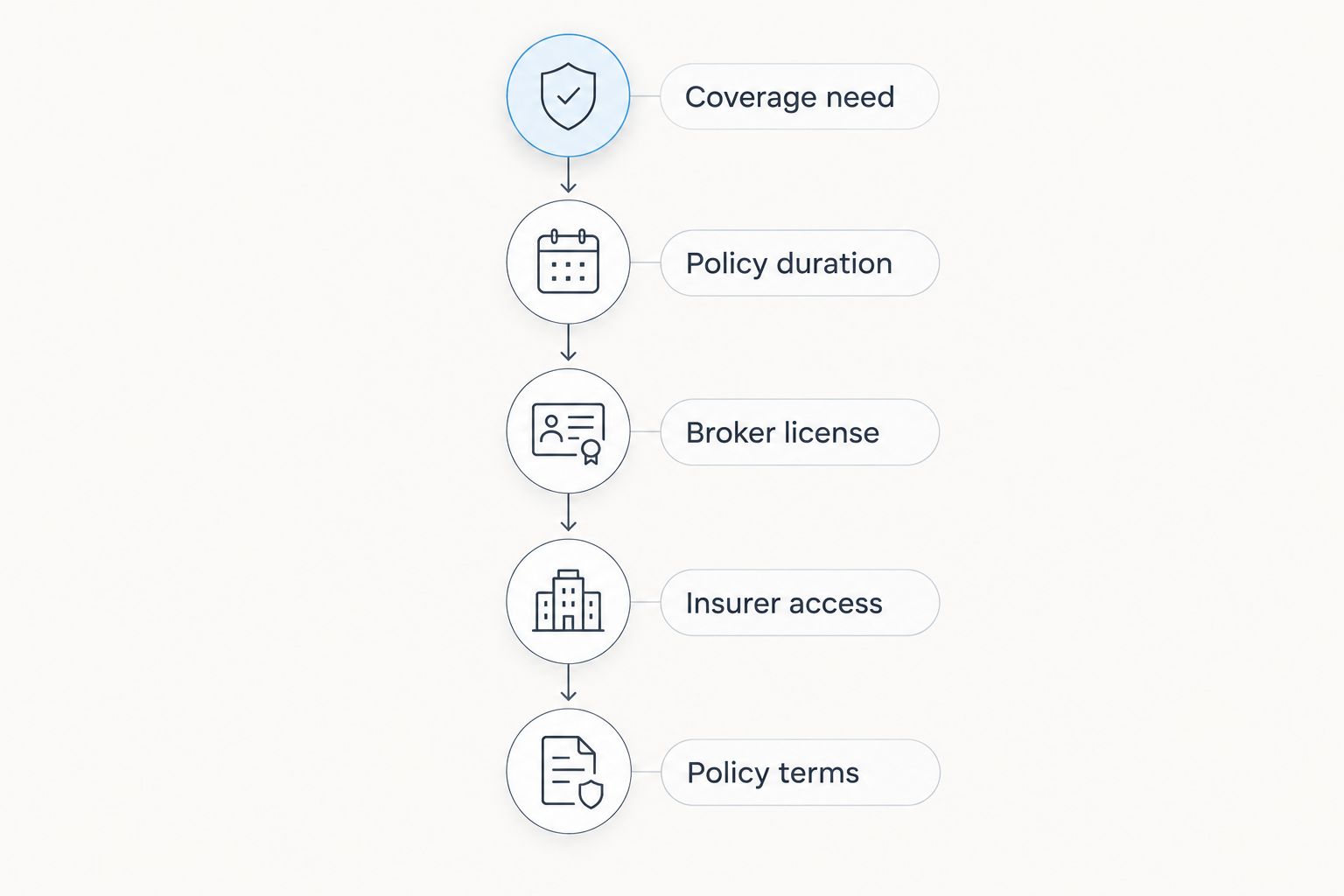
Use this sequence before agreeing to an application:
- Coverage need: Describe the obligation the death benefit should address.
- Policy duration: Decide whether that obligation is temporary or lifelong.
- Broker license: Verify the professional through your state insurance department.
- Insurer access: Ask which represented insurers fit the need.
- Policy terms: Review benefits, limitations, and application requirements.
This order keeps a product pitch from defining your needs. You establish the problem first; the broker explains how a policy addresses it.
FAQ
What’s the best type of life insurance broker?
An independent life insurance broker is the default choice when you need to compare represented insurers. A specialist becomes the better fit when underwriting complexity, lifelong coverage needs, or in-person guidance is the main concern.
Are life insurance brokers better than agents?
The title alone does not establish which professional is better for you. Verify licensing, insurer representation, and whether the person can explain suitable alternatives rather than assuming the title guarantees independence.
Does an independent life insurance broker compare every insurer?
No, independence does not mean access to every insurer. Ask which insurers the broker represents and which of those are relevant to your circumstances.
Can a broker guarantee life insurance approval?
No, the insurer makes the underwriting decision. A broker can explain requirements and application options, but preliminary feedback is not final approval.
Should I choose term or permanent life insurance?
Choose the policy type according to the duration and purpose of your coverage need. Term insurance addresses a defined period, while permanent coverage requires careful review of lifelong needs, guarantees, and funding obligations.
How do I check a life insurance broker’s license?
Check the professional through your state insurance department’s licensing resources. Confirm the person’s identity and authority to sell the relevant insurance before submitting an application.
Does Lifeinsuranceconsumers sell life insurance?
Lifeinsuranceconsumers sells life insurance. Before choosing a policy through any seller, confirm the licensed professional involved, insurer representation, and the policy’s terms.
Should I cancel my existing policy when applying for another?
Do not cancel existing coverage merely because you have submitted a replacement application. Confirm that the new coverage is in force, understand its terms, and review the consequences of replacing the existing policy.
One last thing
A familiar broker does not make a replacement policy equivalent to your existing coverage. New coverage can introduce different contractual provisions, including a new contestability period under applicable policy terms and state law.
Before replacing life insurance in 2026, compare what you lose as carefully as what you gain. Confirm the new policy is in force and review its documents before making any decision to cancel existing coverage.