
Best starting point: Mutual of Omaha for seniors considering health-question coverage. Best membership-based option: AARP life insurance from New York Life. Best guaranteed-acceptance comparison: Gerber Life. These are starting points for comparing burial insurance for seniors in 2026, not a reason to buy before checking the actual policy.
- Compare Mutual of Omaha first if you can answer health questions; review the offered benefit schedule before choosing.
- AARP life insurance from New York Life is a membership-based option, not insurance issued by AARP itself.
- Compare Gerber Life when guaranteed acceptance matters; its initial benefit restrictions require careful review.
- The best burial insurance for seniors matches eligibility, final expense needs, and benefit timing—not just a familiar name.
Lifeinsuranceconsumers sells life insurance. Use this guide to separate insurer names from policy terms, then compare written offers on the same basis. A familiar company name does not tell you whether your beneficiary receives the full benefit immediately.
Why this matters
Burial insurance generally means a smaller life insurance policy intended to help with funeral expenses and other final bills. The beneficiary usually receives the insurance proceeds; the policy does not automatically purchase a funeral or reserve services with a funeral home.
That distinction matters. You need to compare the insurance contract, not assume that a policy advertised for funeral expenses pays a particular funeral provider directly.
The main decision in 2026 is whether you qualify for health-question coverage or need guaranteed acceptance. Guaranteed acceptance removes health-based qualification questions, but an initial limited-benefit period can change what your family receives after a death from natural causes.
Choose burial insurance by underwriting and benefit timing before comparing company names.
What makes the best burial insurance for seniors
Use these criteria before reading the company shortlist:
- Eligibility: Confirm the applicant's age, state, membership requirements, and health-question rules for the specific policy.
- Benefit timing: Determine when the full death benefit becomes payable and what happens during any initial restricted period.
- Coverage permanence: Check whether coverage continues for life when required payments are made, rather than ending after a term.
- Payment obligations: Read whether payments remain level, how long they continue, and what happens after a missed payment.
- Contract clarity: Identify the insurer, beneficiary provisions, exclusions, and cancellation terms in the actual documents.
- Existing protection: Compare the proposed policy with insurance you already own before replacing or adding coverage.
Do not treat “no medical exam” and “no health questions” as interchangeable. A policy can skip an examination while still using your answers and other underwriting information to decide eligibility.
Burial insurance companies at a glance
This 2026 shortlist separates three useful shopping routes. It is not a financial-strength ranking, and the order does not mean every applicant should choose the first company.
| Company or program | Best for | Standout distinction | Key limitation |
|---|---|---|---|
| Mutual of Omaha | Seniors comparing health-question whole life coverage | Offers simplified-issue whole life coverage through its Living Promise product | Health answers affect eligibility; inspect the offered benefit schedule |
| AARP life insurance from New York Life | Eligible members considering guaranteed acceptance | Combines an AARP-branded program with New York Life as insurer | Membership and eligibility rules apply; guaranteed acceptance has initial benefit restrictions |
| Gerber Life | Seniors comparing a direct guaranteed-acceptance option | Offers Guaranteed Life Insurance without health questions | Natural-cause deaths have a limited benefit during the initial period |
Company branding is not a substitute for the issued contract. Ask which legal insurance company issues the policy, particularly when the name on the advertisement differs from the insurer named in the documents.
1. Mutual of Omaha: best for health-question coverage comparisons
Mutual of Omaha belongs at the beginning of your comparison if you are willing to answer health questions. Its Living Promise product is simplified-issue whole life insurance, a different application route from guaranteed acceptance.
Simplified issue does not mean automatic approval. Your application determines eligibility and the coverage offered, so the useful question is not merely whether an examination is required—it is which benefit schedule you qualify for.
Mutual of Omaha pros:
- Provides a health-question coverage route to compare before defaulting to guaranteed acceptance.
- Offers whole life insurance intended to remain in force when its payment requirements are met.
- Gives you a concrete alternative against which to evaluate a guaranteed-acceptance offer.
Mutual of Omaha cons:
- Health answers affect eligibility; the advertised product is not an approval promise.
- You must distinguish the benefit schedule offered to you rather than assume every application receives the same terms.
Best for: Seniors who can complete health questions and want to investigate whether they qualify for coverage without the initial limitations associated with guaranteed acceptance.
For your 2026 comparison, ask the seller to show the benefit payable after a natural-cause death immediately after issue. Then ask the same question about an accidental death. Those answers are more useful than the phrase “easy application.”
Also confirm that the application information is accurate before signing. An agent's verbal reassurance does not change an incorrect answer recorded on your application.
Verdict: Hold until Mutual of Omaha's offered benefit schedule and underwriting outcome are clear.
2. AARP life insurance from New York Life: best for eligible members
AARP life insurance from New York Life is a program, not insurance issued by AARP itself. New York Life is the insurer, and the program includes a guaranteed-acceptance life insurance option for eligible applicants.
Treat the specific option as the product you are comparing. A program can contain different insurance types, and a description of one option does not establish the terms of another.
AARP life insurance from New York Life pros:
- Provides a membership-based route for eligible applicants seeking guaranteed acceptance.
- Offers an option that does not require health questions for acceptance.
- Identifies New York Life as the insurer rather than leaving the program sponsor and insurance company indistinguishable.
AARP life insurance from New York Life cons:
- Membership and applicant eligibility requirements limit who can apply.
- Guaranteed Acceptance Life Insurance has limited benefits for natural-cause deaths during its first 2 years.
Best for: Eligible AARP members who specifically need guaranteed acceptance and understand the initial benefit restriction.
Before choosing, read the guaranteed-acceptance documents rather than relying on general AARP program information. Ask what is payable during the restricted period, what changes afterward, and which accidental-death terms apply.
Do not assume membership alone makes this the best fit. If you qualify for health-question coverage, compare that alternative before accepting a policy with an initial restricted benefit.
Verdict: Hold until AARP eligibility and New York Life's initial benefit terms match your needs.
3. Gerber Life: best for a guaranteed-acceptance comparison
Gerber Life offers Guaranteed Life Insurance without health questions. That makes it a relevant comparison when health-based qualification is the obstacle to obtaining coverage.
Guaranteed acceptance addresses eligibility, not immediate full protection against every cause of death. Gerber Life's guaranteed policy has a limited natural-cause death benefit during the first 2 years; review the contract for the exact payment provisions and applicable exceptions.
Gerber Life pros:
- Provides a guaranteed-acceptance route without health questions.
- Offers whole life coverage rather than a policy designed to end after a selected term.
- Gives applicants another guaranteed-acceptance option to compare against a membership-based program.
Gerber Life cons:
- The initial natural-cause death benefit restriction matters if immediate full coverage is your priority.
- Guaranteed acceptance does not establish that this policy is a better fit than health-question coverage you qualify for.
Best for: Seniors who need guaranteed acceptance and want to compare that policy structure without choosing solely on a membership program.
For a 2026 application, confirm the current age and state eligibility rules before submitting personal information. Then compare the death-benefit schedule with other written offers using the same coverage amount and applicant details.
Verdict: Hold until Gerber Life's initial benefit restriction fits the protection you need.
How this shortlist is ranked
The order follows a decision sequence: investigate health-question coverage, then compare guaranteed-acceptance routes if needed. It prioritizes eligibility, benefit timing, permanence, and contract clarity—not advertising prominence.
This is not a claims-service scorecard or a claim that every insurer offers the same terms nationwide. Lifeinsuranceconsumers sells life insurance, but this guide does not establish that it represents every insurer named here.
The policy offered to you decides the outcome. A company can belong on a useful shortlist without being the right choice for your application.
Which burial insurance should you choose?
Start with health-question whole life coverage if you can qualify; compare guaranteed acceptance when that route does not fit. Mutual of Omaha is the starting point on this shortlist for the first route. AARP life insurance from New York Life and Gerber Life belong in the second comparison.
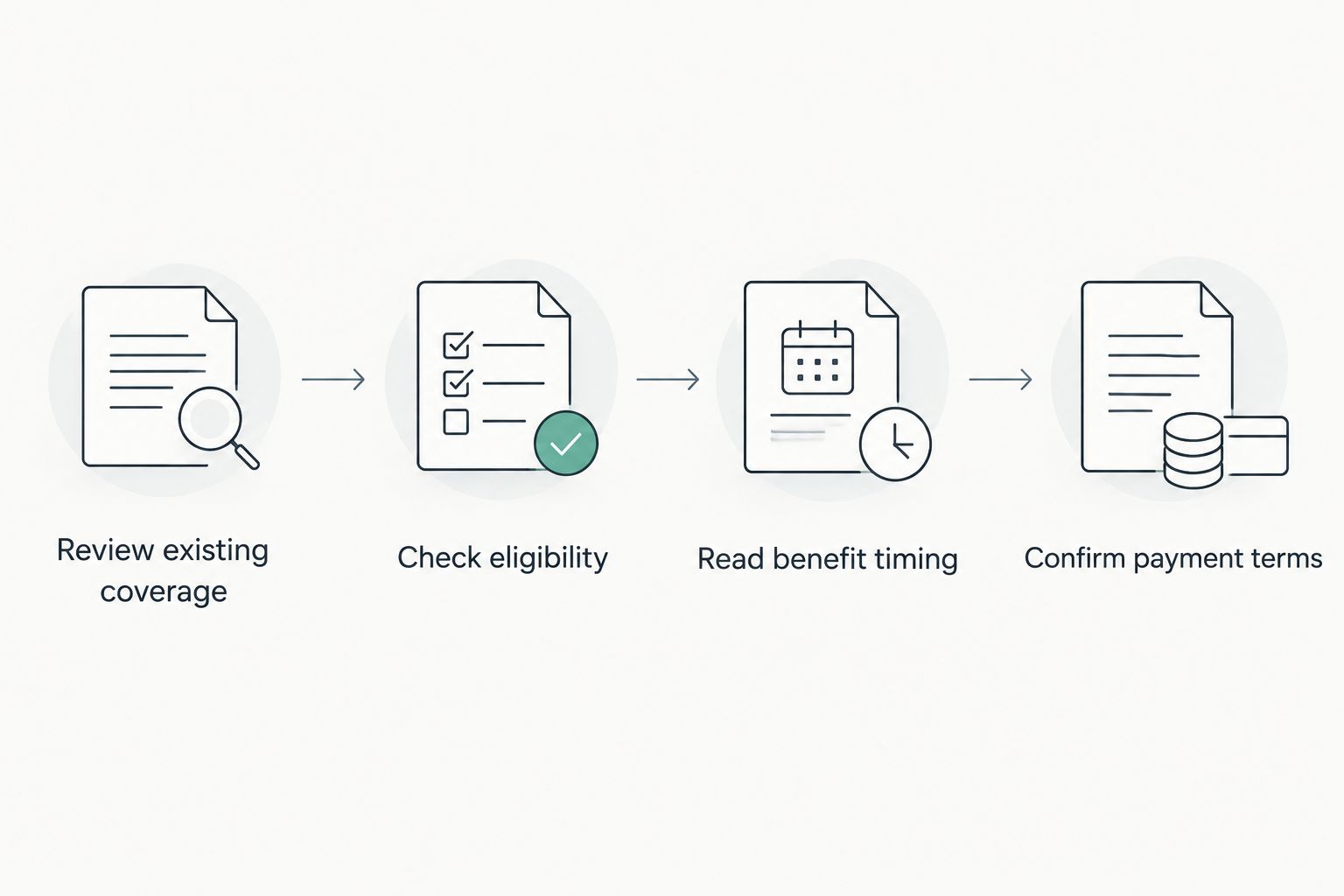
Use this sequence to make your choice:
- Review existing coverage. List the insurance you already own, its beneficiary, and whether it is expected to remain active.
- Check eligibility. Confirm application requirements before treating a company as a realistic option.
- Read benefit timing. Compare natural-cause and accidental-death payments during any initial restricted period.
- Confirm payment terms. Read the ongoing obligations and lapse provisions before signing.
Your beneficiary also needs usable information. Tell that person where the policy is stored and which insurer to contact; buying coverage without making it findable creates an avoidable problem.
A waiting period is not the same as contestability
An initial limited-benefit period determines what the contract pays under specified circumstances. A contestability provision concerns the insurer's ability to investigate application statements and contest a claim under the policy and applicable law.
Life insurance commonly includes a 2-year contestability period. That does not mean all deaths during that period receive only a reduced benefit, nor does it mean inaccurate application answers become harmless.
For a 2026 purchase, ask separately about benefit restrictions, contestability, and exclusions. Combining them into one question about a “waiting period” leaves important terms unresolved.
Do not replace coverage before checking the consequences
An existing policy deserves a separate review before you cancel it. Replacing coverage can introduce new underwriting, new initial benefit restrictions, or a new contestability period.
Compare the existing and proposed contracts side by side. Do not cancel the old policy while the replacement is merely an application or while its final terms remain unknown.
FAQ
What's the best burial insurance for seniors in 2026?
The best burial insurance for seniors matches eligibility and benefit timing to the applicant's needs. Compare Mutual of Omaha for health-question coverage and AARP life insurance from New York Life or Gerber Life for guaranteed-acceptance options; the issued contract determines the choice.
Is burial insurance the same as final expense insurance?
Burial insurance and final expense insurance generally describe life insurance intended to help with end-of-life expenses. These labels do not establish a particular benefit schedule or require the beneficiary to spend the proceeds only on a funeral.
Can seniors get burial insurance without a medical exam?
Yes, simplified-issue and guaranteed-acceptance policies provide application routes without a medical examination. Simplified-issue coverage can still require health questions, so no examination does not mean automatic acceptance.
Does guaranteed acceptance mean the full benefit starts immediately?
No, guaranteed acceptance does not mean an immediate full benefit for every cause of death. Review the initial natural-cause death benefit restrictions and the separate accidental-death provisions before choosing a policy.
Is AARP the insurance company behind its life insurance program?
No, New York Life is the insurer behind the AARP life insurance program discussed here. Read the specific product documents because program branding does not make all available coverage options identical.
Is Gerber Life better than Mutual of Omaha for seniors?
Neither is better for every senior because the coverage routes discussed here solve different eligibility needs. Compare Mutual of Omaha's health-question coverage with Gerber Life's guaranteed-acceptance option using the actual underwriting outcome and benefit schedules.
Can burial insurance pay expenses other than a funeral?
Life insurance proceeds generally give the beneficiary money rather than automatically purchasing funeral services. Check any assignment or other arrangement separately, especially if you intend a funeral provider to receive payment directly.
Should I cancel my existing insurance after applying for burial coverage?
No, submitting an application is not enough reason to cancel existing insurance. Review the replacement's issued terms, confirm it is in force, and examine any new benefit restrictions or contestability provisions before making a replacement decision.
One last thing
Ask for the policy's natural-cause death benefit schedule, not just its advertised coverage amount. That single document separates an immediate-benefit offer from one with an initial restriction—and turns a company-name comparison into a coverage decision.
Lifeinsuranceconsumers sells life insurance. When evaluating burial insurance for seniors in 2026, keep the contract, application answers, and beneficiary information together so the protection you choose is also protection your family can find.